Description
The reconstruction and expansion of the Wegscheid substation in Linz is a key component of the major infrastructure project “Secure Power Supply for the Upper Austria Central Region.” The project will transform the existing facility into a major 220/110-kV power distribution hub, helping meet growing energy demand and support the energy transition.
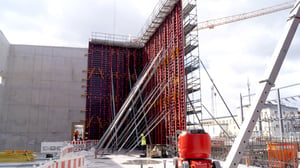
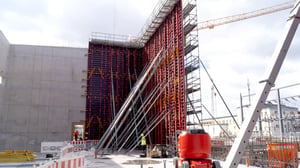
As part of the project, DYWIDAG is constructing several new buildings and transformer facilities, including a 15-meter-high switchgear building. The exceptional wall heights and demanding concreting requirements called for an innovative approach to fresh concrete pressure management and quality assurance.
Challenges
The construction team needed to safely cast walls up to 15 meters high while maintaining productivity and keeping formwork pressures under control. To achieve this, a faster-hardening concrete mix was used in the lower wall sections and standard concrete in the upper sections.
Key challenges included:
- Uncertainty about fresh concrete pressure development in 15-meter-high walls
- No data available to validate the planned multi-mix concreting strategy
- Risk of pressure spikes caused by small changes in pouring speed or volume
- Need to maximize pouring speed while maintaining formwork safety and concrete quality
Solution and results
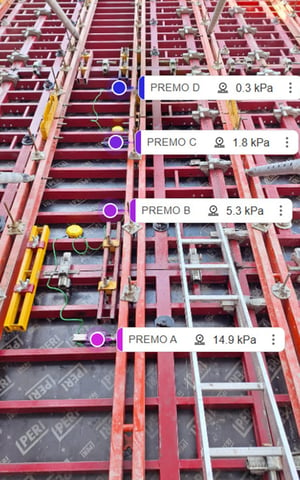
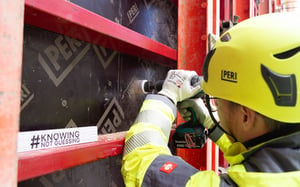
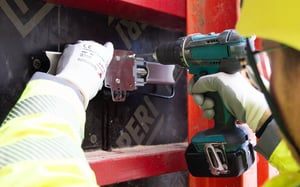
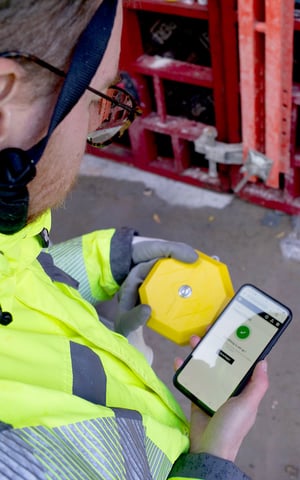
PREMO sensors connected through ISC Link were installed to continuously monitor fresh concrete pressure throughout the pour. The real-time data provided direct insight into pressure development and validated the selected concreting strategy.
The measurements confirmed that the lower concrete sections had already reduced their pressure significantly while concreting continued above. When the concrete level reached approximately 6 to 8 meters, pressure in the lower zones was already close to zero, demonstrating the effectiveness of the faster-hardening concrete mix.
The live sensor data enabled the construction team to optimize pouring rates with confidence and make data-driven decisions during concreting. The project demonstrated that a 15-meter wall pour could be completed within approximately 11 to 12 hours while maintaining pressure within acceptable limits.
By replacing assumptions with real measurements, PREMO and ISC Link helped the team validate an innovative concreting approach, improve productivity, and gain objective documentation of fresh concrete pressure behaviour throughout the project.